

The complete guide
How To Choose A Latex Mattress Topper
The problem a topper solves
Most of us do not get to replace a mattress whenever we want. They are expensive, heavy, and a hassle to swap out. So we keep sleeping on something that is a bit too firm, a bit too soft, or just past its best. You feel it in the morning, in your back, your hips, or that groggy heat when you throw the duvet off at 3am.
A latex mattress topper is the small fix for a big problem. It is a layer you lay on top of the mattress you already own. It can soften a hard bed, firm up a sagging one, and cool down a hot one. You are not buying a whole new bed. You are changing the top few centimetres, which is the part your body actually touches.
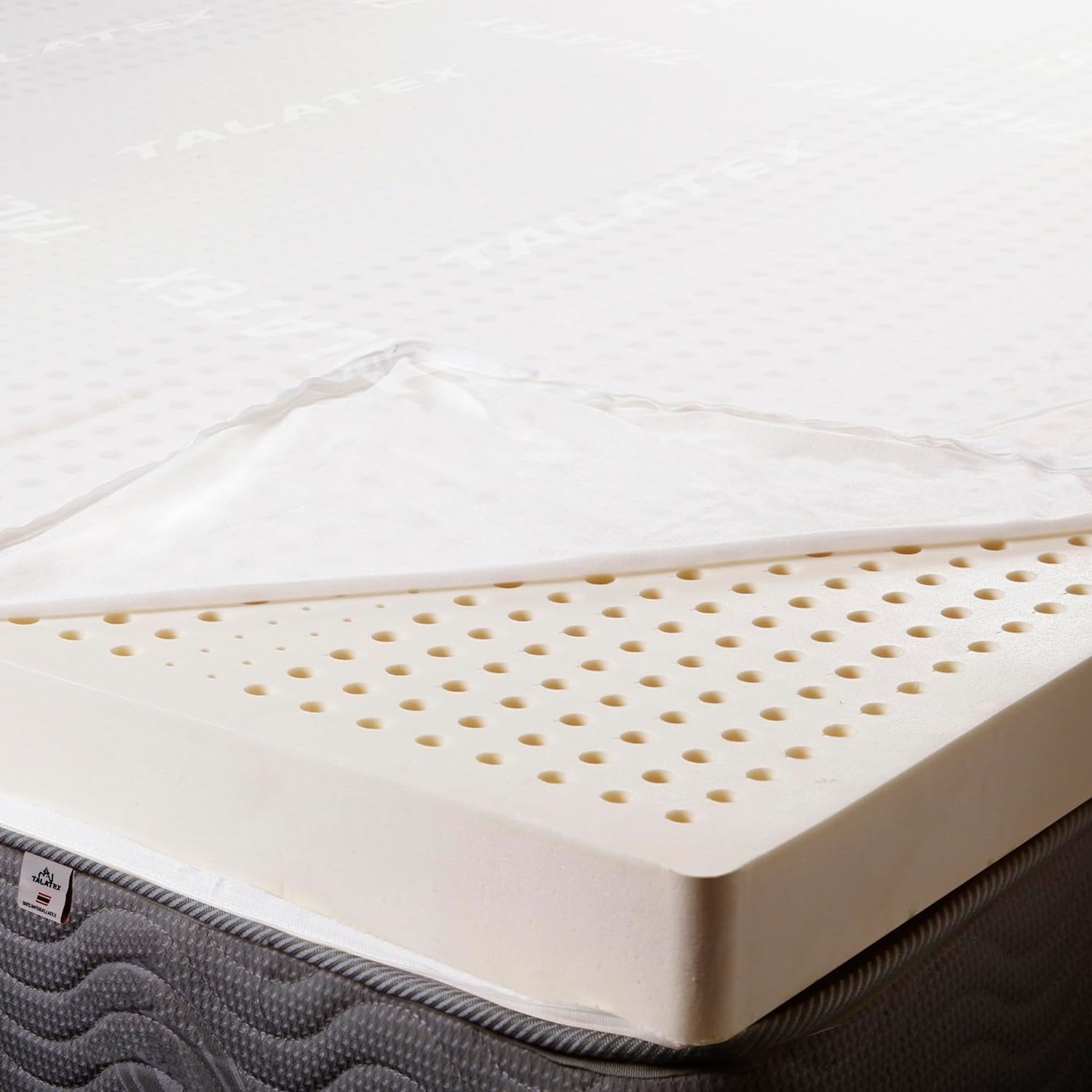
This particular topper is natural latex, medium firm, and 5cm thick. That mix makes it a sensible all rounder for a lot of homes.
How latex works
Latex foam comes from the sap of the rubber tree. The version here is made using the Dunlop process, which gives a denser, more supportive foam. That density matters. It is the reason a good latex topper holds its shape year after year instead of dipping where your weight goes.
The feel of latex is different from memory foam. Memory foam slowly moulds to you and can feel like quicksand. Latex is more responsive. It gives where you press, then springs back when you move. You do not feel stuck, and you can turn over without fighting the surface.
Then there is heat. Latex has an open cell structure, which is a fancy way of saying it has lots of tiny channels for air. Warm air moves out, cooler air moves in. That is why people who sleep hot often get on better with a breathable latex topper than with foam that traps warmth.
Latex is also naturally good at resisting dust and bacteria, which is part of why it is described as hypoallergenic. If you have allergies or sensitive skin, that is a real plus.
Who it suits
A medium firm natural latex topper lands in the middle of the firmness scale, and the middle is where most people are comfortable. Here is a rough guide.
Back sleepers tend to do well with medium firm support because it keeps the spine in a straight line without letting the hips sink. Stomach sleepers usually want firmer support too, so a medium firm topper helps stop the lower back from arching.
Side sleepers are the group to think about. Side sleeping puts your shoulder and hip into the surface, and those points want some give. A 5cm medium firm topper gives some relief, but a heavier side sleeper, or someone who wants deep cushioning, might prefer a softer or thicker latex topper instead.
Couples often have different needs, and a medium firm topper is a fair compromise. It supports a heavier partner while still giving a lighter partner some softness. It is rarely the dream answer for both, but it is usually a good peace treaty.
How to choose the right one
A few simple questions help you pick.
First, what is wrong with your current bed? If it is too hard, you want a topper that adds a little softness on top, which a medium firm latex layer does without going mushy. If it is sagging, a firmer, denser topper helps even things out. If it is fine but hot, you are mostly buying the cooling benefit.
Second, what size do you need? This topper is 150 x 200 cm, which suits a UK king bed. Measure your mattress first. The topper should match the mattress size, and a small gap at the edges is normal and nothing to worry about.
Third, how thick should it be? A 5cm topper like this one is a clear comfort upgrade on a mattress that is already decent. If your mattress is very firm or you need deeper relief, a thicker option gives more cushioning. For most people topping a usable bed, 5cm is plenty.
Fourth, do you move a lot? If you rent, study, or shift homes often, the fact that this rolls up matters. It ships vacuum packed and comes with a compression bag, so you can shrink it down, roll it, and carry it without a van. That is a genuine bonus that a full mattress cannot offer.
Setting it up
The first day with a new topper is simple. Unroll it flat on the bed or a clean floor and let it air out for 24 to 48 hours. Natural latex has been compressed for shipping, so it needs a little time to expand fully and breathe. Any light natural scent fades during this window.
Once it has settled, place it on top of your mattress and pull a fitted sheet over both. The sheet holds the topper in place and keeps it clean. If you want extra protection, add a mattress protector under the sheet, especially since the topper itself is dry clean only.
Looking after it
Care here is easy because you mostly let the cover and protector do the work. The topper itself is dry clean only, so do not put the latex in a washing machine. For small marks, dab with a damp cloth and a little mild soap, then let it dry completely before you put bedding back on.
Keep the topper out of direct sunlight, since strong light over time is not kind to latex. Rotate it now and then so it wears evenly. The removable cover with its zipper makes it simple to freshen things up, and a protector on top means spills rarely reach the foam at all.
Treated this way, a natural latex topper holds its support and shape for a long time. That is one of the quiet strengths of latex over cheaper foams.
The short version
If your mattress is close but not quite right, this natural latex mattress topper is an easy upgrade. It is medium firm, so it suits most sleepers, especially back and stomach sleepers and couples. It is breathable, which helps if you run hot, and it is hypoallergenic, which helps if you have allergies. It carries OEKO-TEX Standard 100 certification and comes with a removable cover.
It rolls up small, so it is friendly for renters, students, and anyone who moves. Give it a day or two to expand, pop it under a fitted sheet, and enjoy a cooler, steadier night without buying a brand new bed.