


The complete guide
The U-Shaped Latex Neck Pillow: A Traveller's Guide
Anyone who has tried to sleep sitting upright knows the problem. Your head drops forward, or it rolls sideways and slides off your shoulder, and you jerk awake. Do that for a few hours on a flight or a long drive and you land with a stiff, sore neck that takes the rest of the day to ease. A U-shaped travel pillow is built to stop that, and a latex one does it better than the inflatable and foam pillows most travellers settle for. This guide explains how it works, how to use it, and why the material matters.
Why the U shape
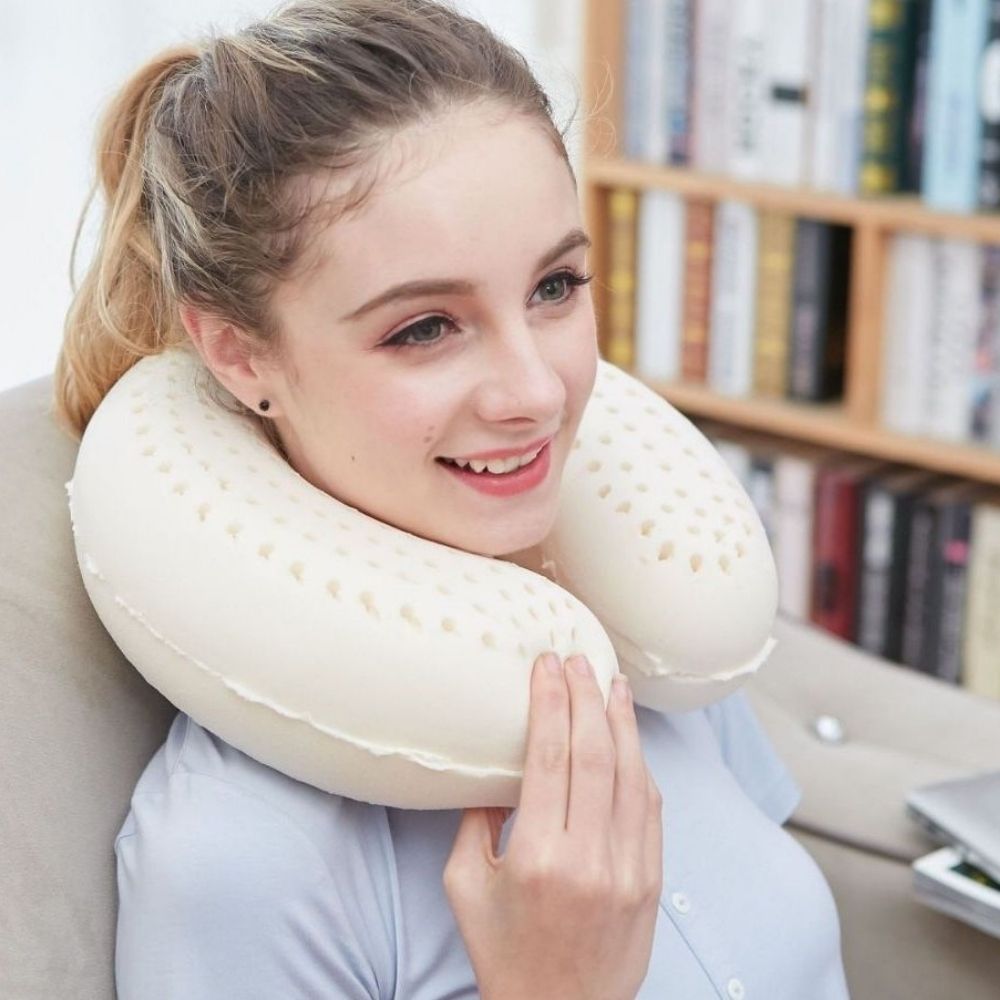
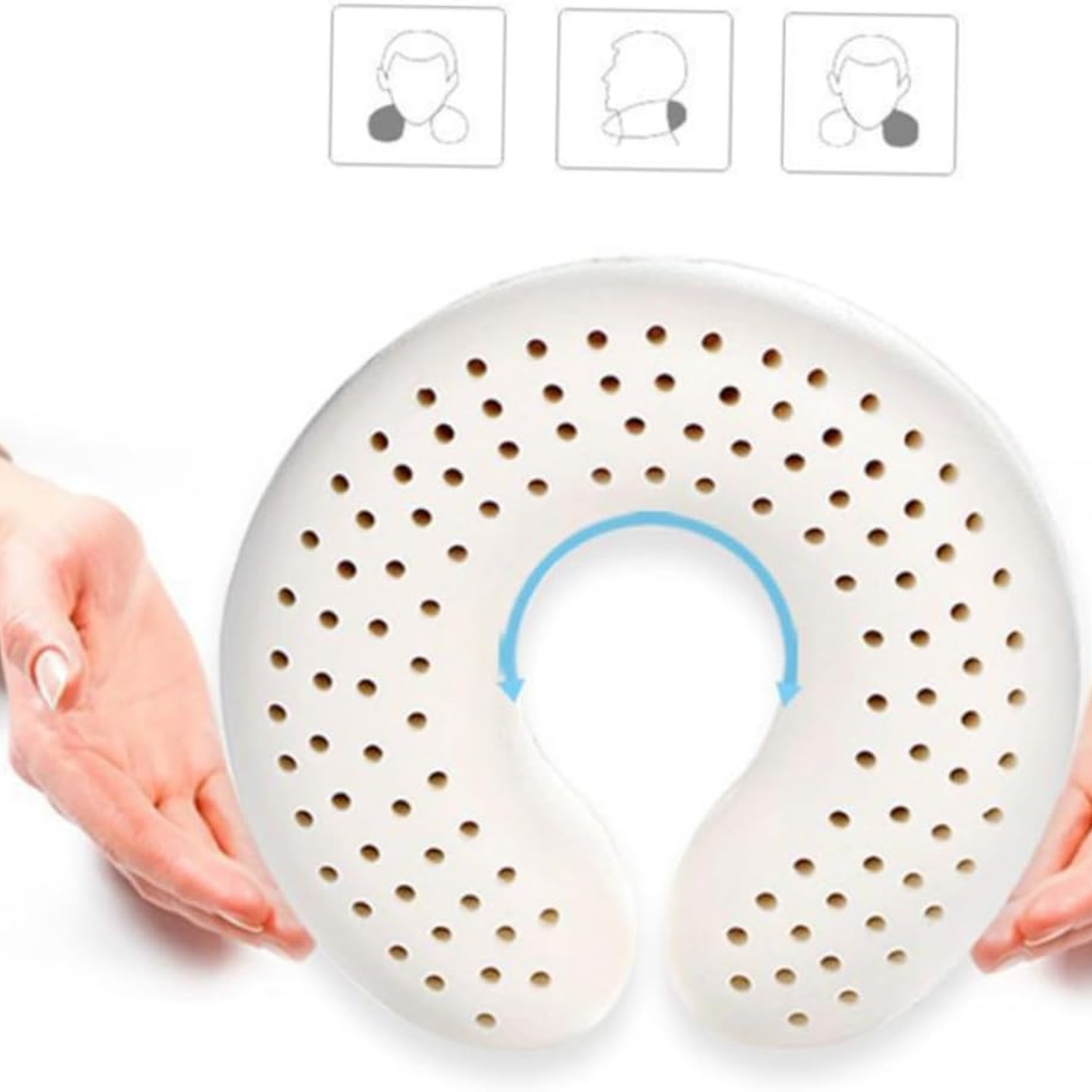
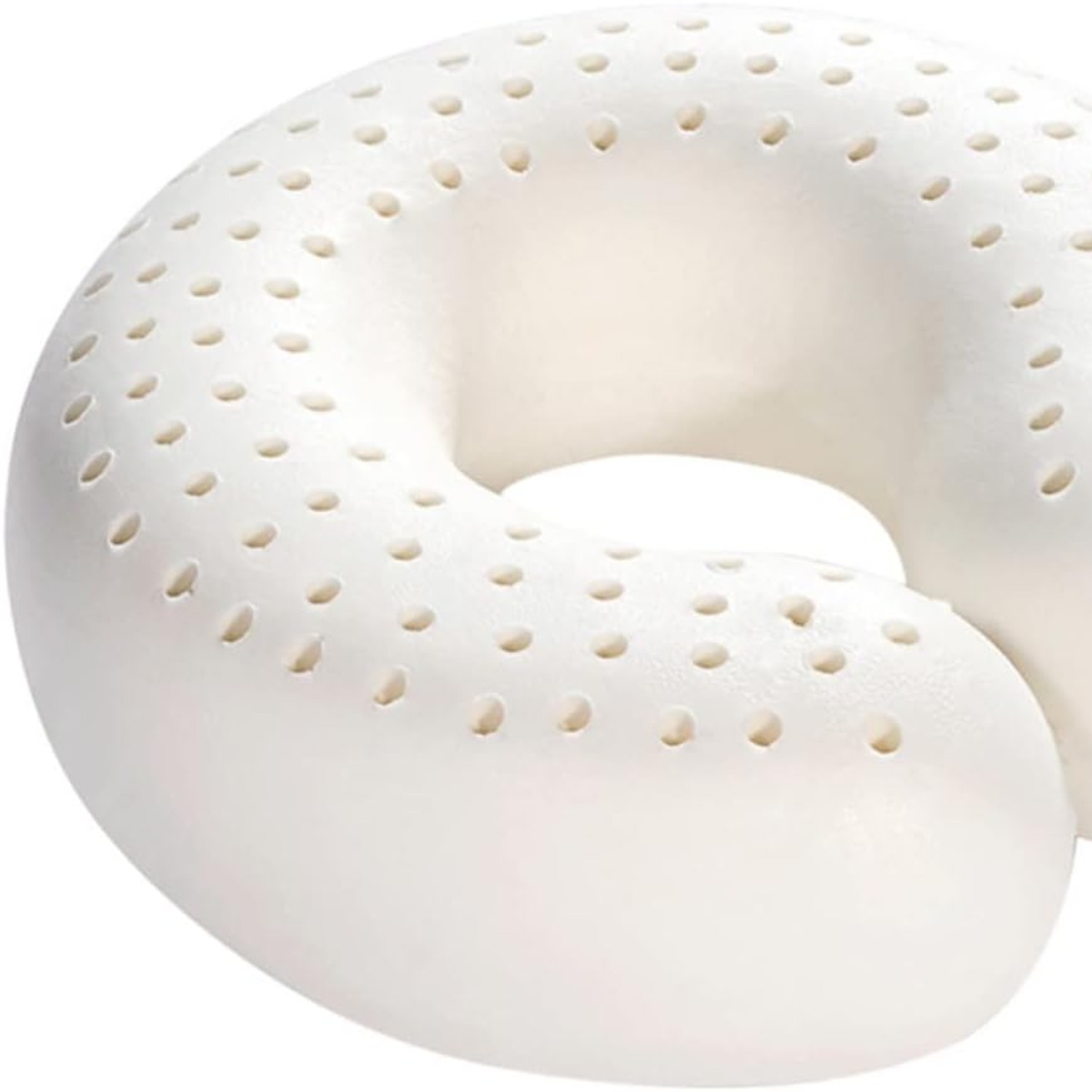
The U, or horseshoe, shape is the standard for travel pillows for a good reason. It is open at the front, so it slips on and off easily, and the two arms of the U cup the back and sides of your neck. That is exactly where support is missing when you sleep upright. Your head wants to fall forward or to the side, and the raised sides give it something firm to rest against, so it stays in a more neutral, supported position.
A u shaped neck pillow is not trying to be a bed pillow. Its job is narrow and specific: hold your head up when there is no headrest doing it for you. Done well, that is the difference between dozing through a flight and waking every twenty minutes.
The problem with inflatable and foam travel pillows
Most travel pillows fall into two camps, and both have a flaw.
Inflatable pillows pack down small, which is their appeal, but they sag the moment you relax your weight onto them. The air shifts, the support gives way, and you either wake up or spend the trip topping up the valve. They also split and spring leaks over time.
Memory foam travel pillows feel nice for the first few minutes, then the heat of your neck softens the foam and it slowly sinks. The support you started with fades over a long trip, and the foam holds warmth against your neck, which gets clammy on a warm flight.
A latex travel pillow avoids both traps, which is why people who travel often move up to one.
Why latex
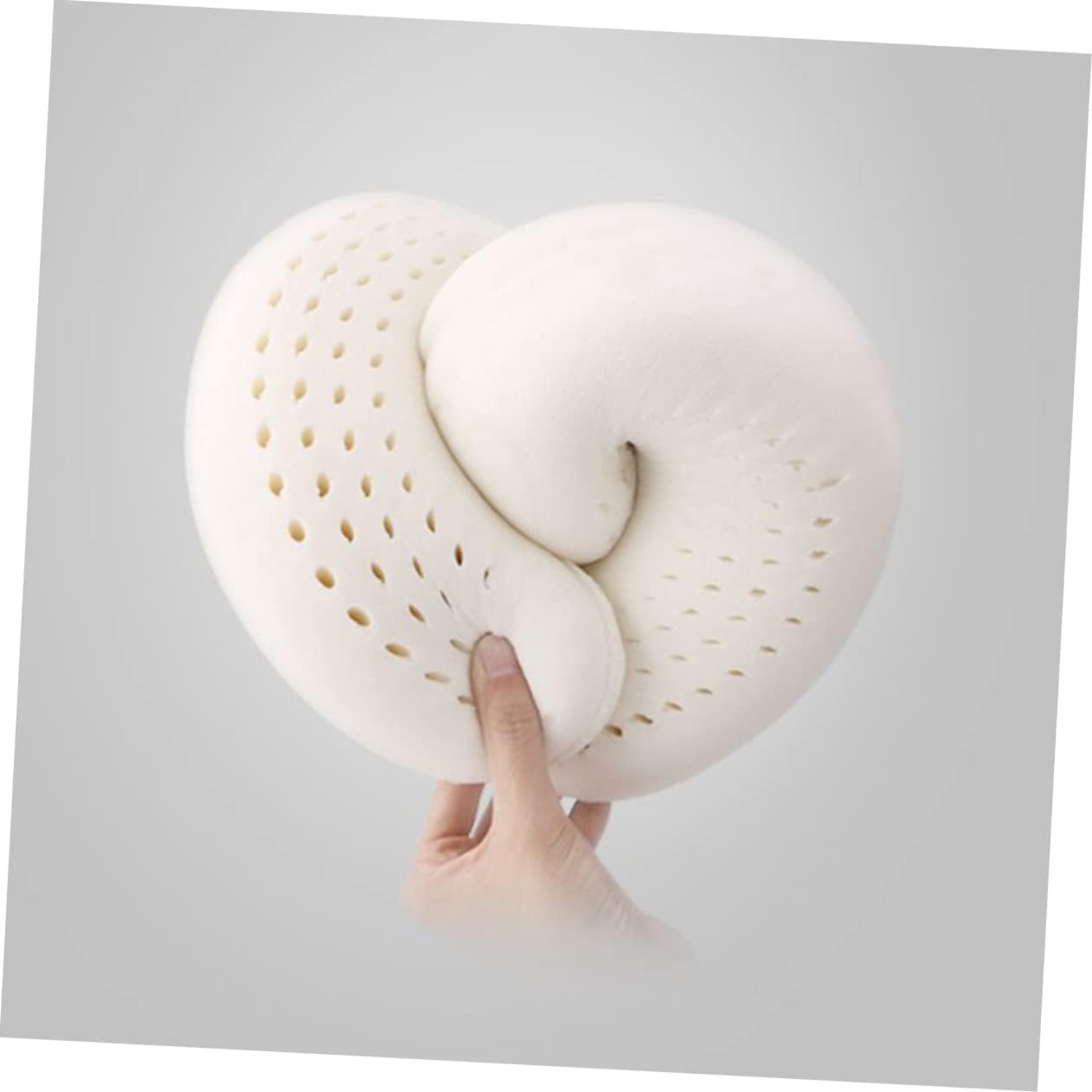
This pillow is 100% natural latex. Latex is springy and instantly responsive, so it holds its shape from the moment you lean into it until you sit up. It does not deflate like an air pillow and it does not bottom out like foam. The support you feel at the start of the trip is the support you have at the end.
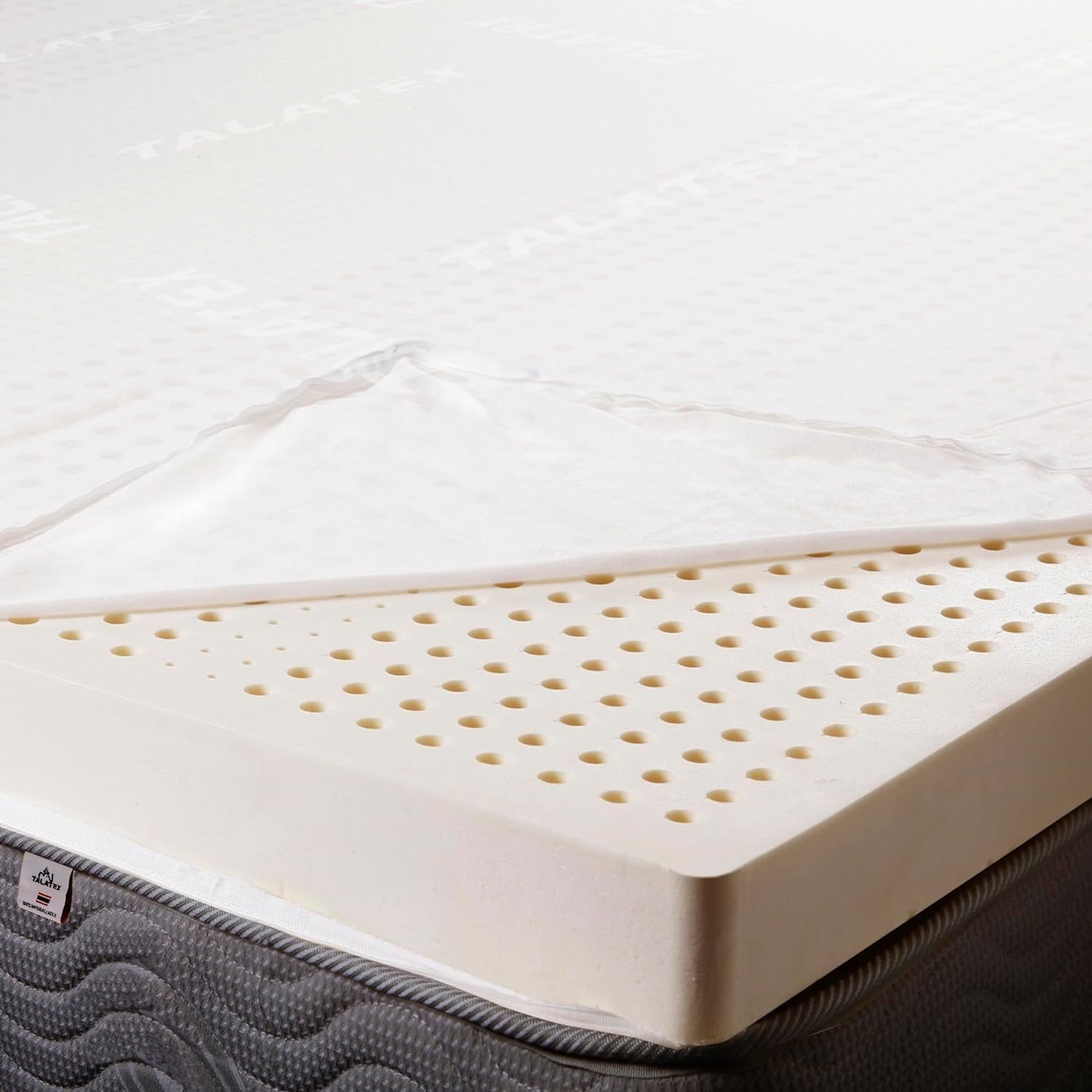
Latex also breathes far better than foam. Air moves through it rather than being trapped, so a latex u shape pillow stays cooler against your neck on a long, warm flight. And because natural latex resists dust mites and mould, it stays cleaner than a soft foam pillow that lives crushed in the bottom of a bag. Some people call latex a rubber pillow, since it comes from rubber-tree sap, and that natural resilience is the whole point.
Size and carrying it
Latex does not compress down as small as an inflatable, so think of it as a carry-on item rather than something that disappears into a pocket. Many travellers loop it over a bag handle. The trade is simple: a little more to carry, far more support, and a pillow that lasts for years instead of failing mid-trip.
How to wear it
Slip the open side of the U to the front, so the two arms come round the sides of your neck and the solid back of the U sits behind. If your head tends to drop forward, you can wear the thicker part at the front under your chin instead, which props your head up and stops it nodding down. Most people find the standard way most comfortable, but the pillow works both ways, so try each on your next trip.
Cool, clean and built to last
Two things come built into the latex. It breathes, so it sleeps cooler than foam, and it resists dust mites and mould, so it stays cleaner. On top of that, it is durable. An inflatable pillow is one puncture away from useless and a foam one packs down within a season, but natural latex springs back trip after trip and holds its shape for years. For someone who travels regularly, an ergonomic latex travel pillow pays for itself by simply not needing to be replaced.
Stopping the side-to-side roll
The worst part of sleeping upright is not the head dropping forward, which you usually catch. It is the slow roll to the side, where your head tips toward your shoulder and the weight pulls on the muscles down one side of your neck. You wake with one side stiff and sore, and on a plane you often wake on a stranger's shoulder.
The raised arms of the U are what stop this. They sit either side of your neck and give your head a firm wall to rest against, so it settles instead of rolling. A soft cushion cannot do this, because it just compresses out of the way. A latex neck support pillow holds, because the latex pushes back. That springback is the difference between a u shaped neck pillow that actually works and one that looks the part but folds the moment you lean on it.
Who it is for, and who it is not
This pillow is for anyone who sleeps sitting upright on the move. Frequent flyers, long-distance drivers and their passengers, train and coach travellers, and people who nap at a desk all get the same benefit: a head that stays up instead of dropping. If you have ever woken with a sore neck on a journey, a u shaped travel pillow is built for you.
It is less useful if you only ever sleep lying flat in a bed, since that is the job of a normal pillow, not a travel one. It is also not a medical device. It supports good neck position while you travel, but if you have a diagnosed neck condition, check with your health professional about what is right for you.
A note on cost over time
A latex travel pillow costs more up front than a cheap inflatable or a foam one off an airport shelf. The maths works out the other way over time. Inflatable pillows split and start leaking, and foam ones pack down and start to smell after enough trips, so you replace them again and again. A latex neck pillow keeps its shape and support for years, so you buy it once. Spread across all the trips you take, it is the cheaper pillow, not the dearer one.
Tips for a long flight
A few small things help you get the most out of it. Put the pillow on before you start to doze, rather than waiting until you are already nodding off, so your head is supported from the start. If your head tends to fall forward, wear the thick part of the U at the front under your chin to prop it up. Recline your seat the little it allows, since even a small recline works far better with neck support than without. And give the pillow a few minutes out of your bag to spring back to full shape before you settle in. None of this is complicated, but together it is the difference between dozing and properly sleeping.
Caring for it
Keep the latex dry and out of direct sunlight, which dries it out and cracks it over time. Spot-clean marks with a barely-damp cloth and a little mild soap, then let it air-dry fully. Never soak the core or put it through the wash. Stored cool, dry and shaded between trips, it will keep doing its job for a long time.
The short version
If you sleep sitting up when you travel, the pillow you use decides whether you arrive rested or sore. A U-shaped latex travel neck pillow holds your head up the whole way, stays cool against your neck, resists the grime that builds up in a travel bag, and lasts for years instead of deflating or sinking. Pack it once and stop buying a new travel pillow every year.