

The complete guide
The Natural Dunlop Latex Pillow: Why Solid Latex Outlasts Everything Else
The Natural Dunlop Latex Pillow is the one to buy if you just want a really good everyday pillow that will not go flat. No contours, no adjustable fill, no gimmicks, just a traditional flat pillow made from a material that happens to be far more durable and far more breathable than the foam, down or polyester most pillows are made from. This guide explains what makes it different and how to choose and care for it.
What "solid natural latex" means
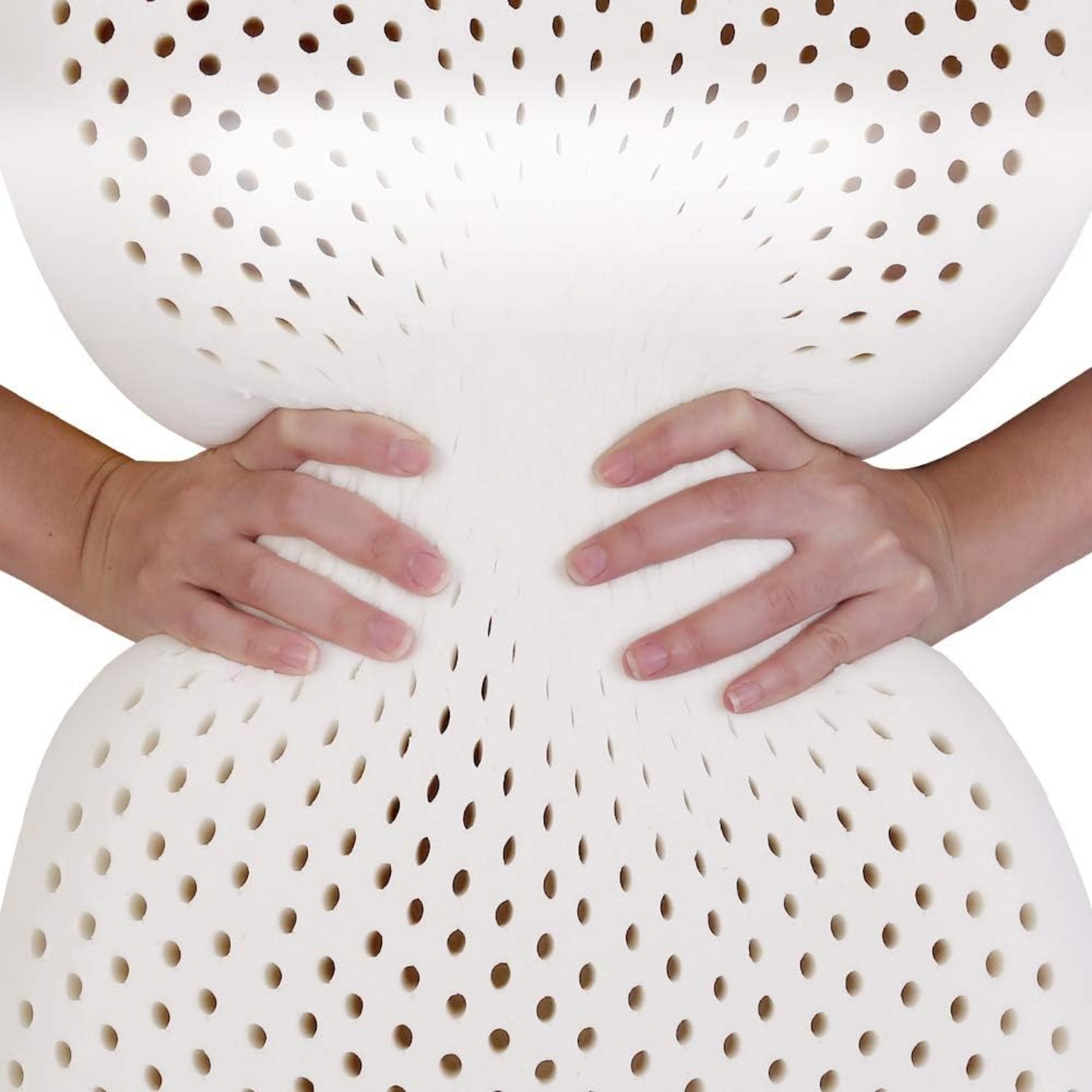
Latex is tapped from rubber trees as a milky sap and then turned into a resilient, springy foam. This pillow is 100% natural latex, not a synthetic blend and not polyurethane foam with a latex name. It is also a solid latex pillow, moulded in one piece, rather than a case stuffed with shredded latex. A solid core gives a consistent, even feel from edge to edge and holds its shape better over the years.
It is made using the Dunlop process. There are two ways to turn liquid latex into foam, Dunlop and Talalay, and this is the Dunlop kind.
Dunlop versus Talalay
The Dunlop process pours the liquid latex into a mould and cures it in a single step. It settles denser at the bottom and produces a firm, supportive, hard-wearing foam. The Talalay process adds a whipping and flash-freezing step, which makes a lighter, softer, airier foam.
For an everyday all-position pillow, the denser Dunlop feel is the better fit. It holds your head and neck in line without being hard, and it does it consistently because latex springs back instead of packing down. That is why dunlop pillows are the traditional choice for people who want firm, lasting support rather than a soft pillow that fades in a month.
Why it does not go flat
Think about every cheap pillow you have owned. Polyester fibre clumps into lumps. Down flattens and needs shaking out every night. Memory foam softens with heat and slowly sinks. They all share the same flaw: the material compresses permanently with use, so the pillow you bought is not the pillow you are sleeping on six months later.
Latex is different because it is genuinely resilient. It compresses under your head and springs straight back, over and over, without losing its structure. A natural latex pillow holds its shape and support for years, which is why it costs more at the start and saves money over its life.
There is a comfort side to this too. A pillow that keeps its loft keeps its feel. The support you chose on the first night is the support you still have a year later, so it does not quietly fade while you sleep on it. With foam and fibre, that slow loss of loft is part of why a pillow that felt fine at first feels wrong a few months in.
Cool and clean by nature
Two more things come built into the material.
First, temperature. Memory foam relies on body heat to soften, so it traps that heat against your head. Latex does not. It breathes better and lets air move more freely, so a latex foam pillow sleeps cooler than a solid block of memory foam. That matters most in summer and for people who run warm at night.
Second, hygiene. Natural latex resists dust mites and mould, the allergens that build up inside ordinary pillows over time and disturb sleep for allergy-prone people. A latex core stays cleaner for longer. Some people call it a rubber pillow, since natural latex is rubber-tree sap, and that natural rubber is part of why it resists the things that spoil cheaper fills.
Natural, and a word on organic
This pillow is 100% natural latex. It is worth being clear that natural and certified organic are not the same claim. Natural latex means the latex itself is natural rather than synthetic. A certified organic latex pillow carries a specific certification on top of that. If certification matters to you, check the details available for your market rather than assuming the two terms mean the same thing.
Choosing your size and feel
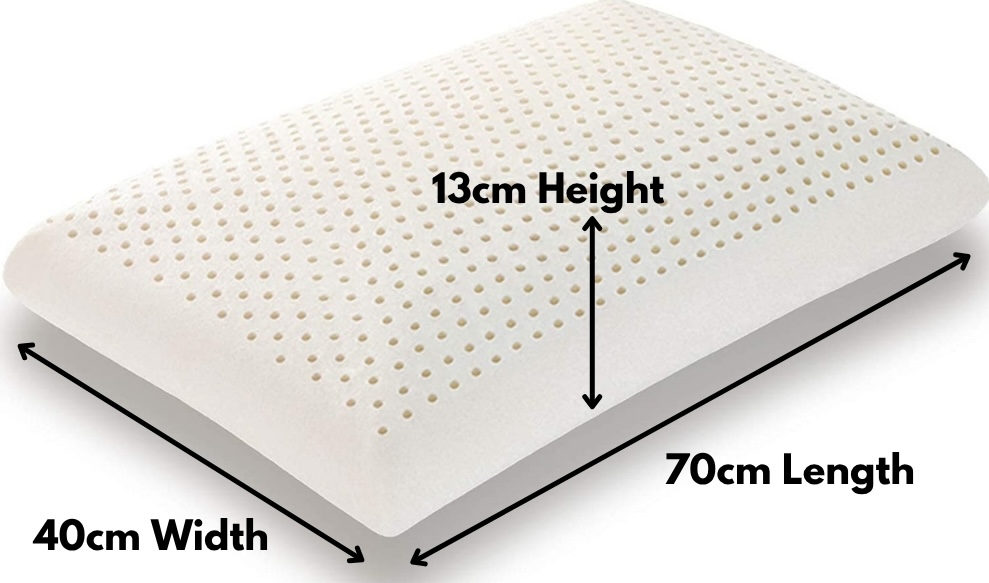
The pillow is 70 cm long and 40 cm wide with a 13 cm flat profile. That is a medium loft that works for most sleepers in most positions, and the larger footprint suits bigger beds and gives you room to move.
The feel is firm, in the way Dunlop latex is firm. It supports without being hard. Back sleepers get a head that stays in line rather than dropping back. Side sleepers get enough height and firmness to fill the gap from the shoulder. Combination sleepers get a single pillow that holds up whichever way they turn. Dedicated stomach sleepers are the exception, since they usually want something lower and softer.
Signs your old pillow is past it
It is easy to put up with a tired pillow without noticing how much it is costing you. A few signs make it obvious. If you fold the pillow in half or stack a second one on top before you can get comfortable, it has lost the loft it started with. If you wake with a stiff neck that eases after an hour, your head was held out of line all night. If you flip the pillow looking for a cool side, it is trapping heat. And if you are buying a new pillow every year or so, you are paying for the same problem on repeat.
A solid latex pillow answers all four. It keeps its loft, so you stop folding and stacking. It holds your neck in line, so you wake without the stiffness. It breathes, so there is no hunt for a cool side. And it lasts for years, so the yearly replacement stops. That is the case for a dunlop latex pillow over another cheap one: you fix the problem once.
Latex compared with foam, down and fibre
It helps to see where solid latex sits against the materials most pillows are made from. Memory foam moulds to your head, which feels nice for a minute, but it softens with body heat and keeps sinking, so the support you set out with drifts through the night while the foam holds heat against you. Down feels plush and then squashes flat, so you spend the night fluffing it, and it gives little structured support. Polyester fibre is cheap and light, then clumps into lumps within months.
Latex is the outlier. It is responsive but springs back instead of sinking, so the support stays put from the first minute to the last. It breathes rather than trapping heat. And it lasts rather than wearing out. You pay more once and buy far fewer pillows over the years, which is the real case behind choosing the best pillow natural latex can offer rather than another bargain-bin foam one.
Caring for your pillow
The rules are simple and they all come back to keeping the latex dry and shaded. Spot-clean marks with a barely-damp cloth and a little mild soap, then let the pillow air-dry fully. Never soak the core or put it through the wash, because water breaks latex down. Keep it out of direct sunlight, which dries out latex and causes it to crack over time. Looked after this way, the pillow will outlast several rounds of ordinary pillows.
What to expect in the first week
If you are coming from a soft, flat pillow, a firm Dunlop latex pillow will feel different on the first night, and that is normal. Your head sits higher and more supported than it did on a pillow that had quietly collapsed, so it can take a few nights for your neck to settle into being held in line rather than propped at an angle. Most people adjust within a week, and the usual report is that they stop waking with the stiffness they had learned to ignore.
A couple of practical notes for those first nights. Let the pillow air out of its packaging for a day before you use it, which clears the faint natural-latex scent. And give the feel a fair trial rather than judging it on night one, the way you would with a new mattress or a new pair of shoes. The support that feels firm at first is usually the support that was missing.
If after a week it still feels too high for the way you sleep, that is useful information: a dedicated stomach sleeper, for instance, will almost always prefer a lower, softer pillow, and that is a fit issue rather than a fault with the pillow.
The short version
A good everyday pillow keeps its shape, supports your neck, and stays cool and clean while it does it. The Natural Dunlop Latex Pillow does all of that: a solid, one-piece 100% natural latex core, the firm and supportive Dunlop feel, better breathability than foam, and a centre that naturally resists dust mites and mould. Buy it once and stop replacing flat pillows every season.