

The complete guide
Science Kit for Kids: A Buyer's Guide to Hands-On Learning at Home
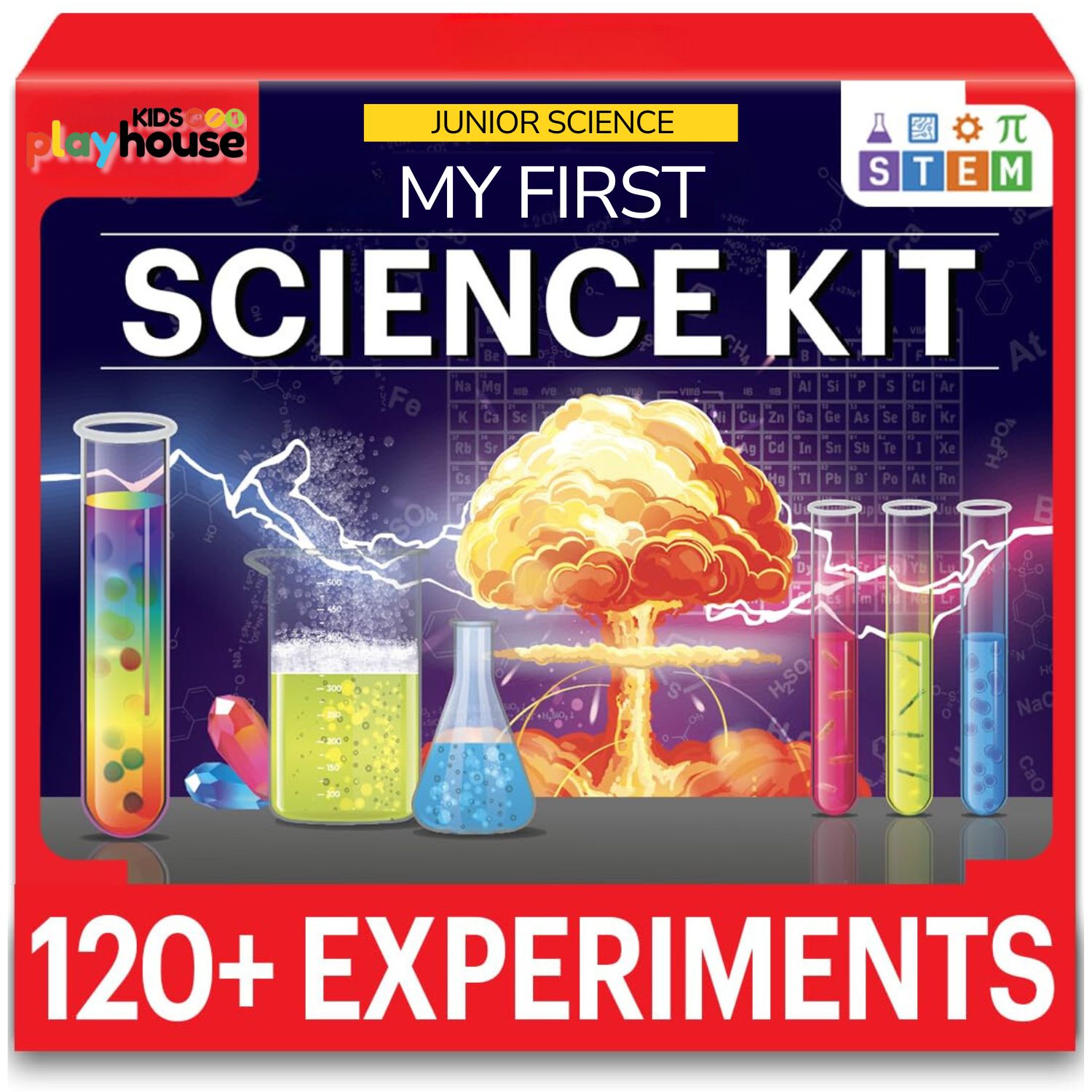
Children are natural scientists. They ask why the sky is blue, what happens if you mix this with that, and how things work, all day long. A science kit for kids gives those questions somewhere to go. With over 120 experiments in one box, it turns the kitchen table into a lab and curiosity into hours of hands-on discovery. This guide covers what you get, what your child learns, and how to get the most from it.
Why hands-on science works
There is a big difference between reading about a science idea and doing it. When a child carries out an experiment themselves, watches the result happen in front of them, and works out why, the learning sticks in a way a textbook never manages. They are not being told a fact. They are discovering it.
That is the real value of a kit like this. The science is hidden inside the play, so a child learns about reactions, cause and effect, and how the world works while they think they are just having fun. Curiosity does the teaching.
Over 120 experiments
The number that matters here is 120-plus. A lot of science toys give you one experiment, which is done in an afternoon and forgotten. This gives you weeks, even months, of activities from a single box. You could do one experiment a week for over two years and still have more to try.
That depth changes how the kit gets used. Instead of a one-off novelty, it becomes a routine: a weekend project, an after-school activity, a rainy-day standby. Many families settle into a regular science session, which is a lovely habit to build with a child.
Made for age 5 and up
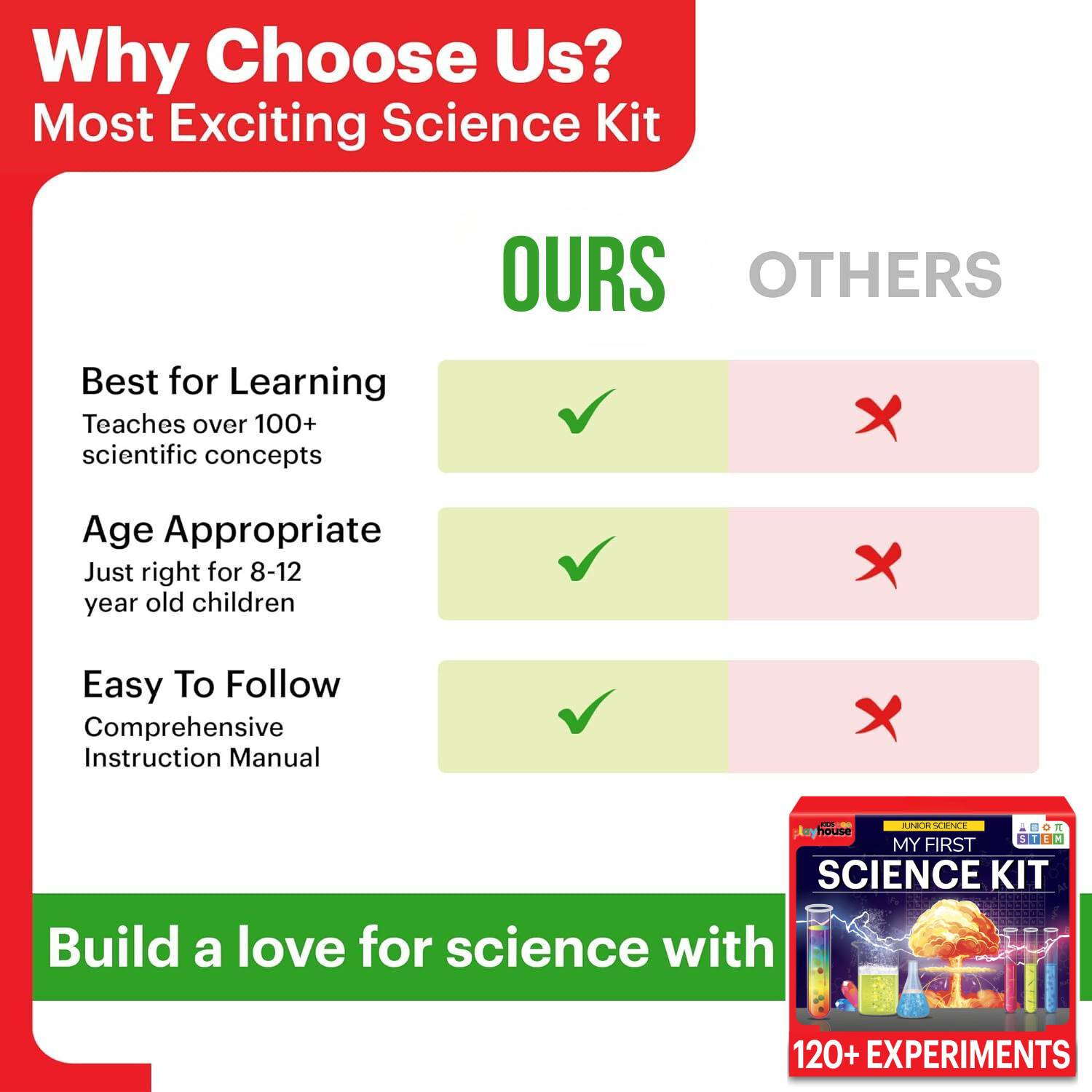
It suits children from age 5 upward, and that range is part of its strength. A young beginner starts with the simpler experiments, with a parent helping out, while an older child takes on the more involved ones. The same box keeps offering a suitable challenge as a child grows, so it is not outgrown in a year.
For the youngest scientists, the experiments double as a shared activity. Sitting down to do one together is quality time that happens to be educational, and it often sparks the kind of follow-up questions that lead to even more learning.
Doing it safely
Science is hands-on, so a bit of sensible supervision keeps it safe and fun. Children should be supervised throughout, with closer help for younger ones and for any experiment the instructions flag. Follow the instructions for each activity, keep small or consumable parts away from younger children, and set up on a wipeable surface so any mess is easy to clear.
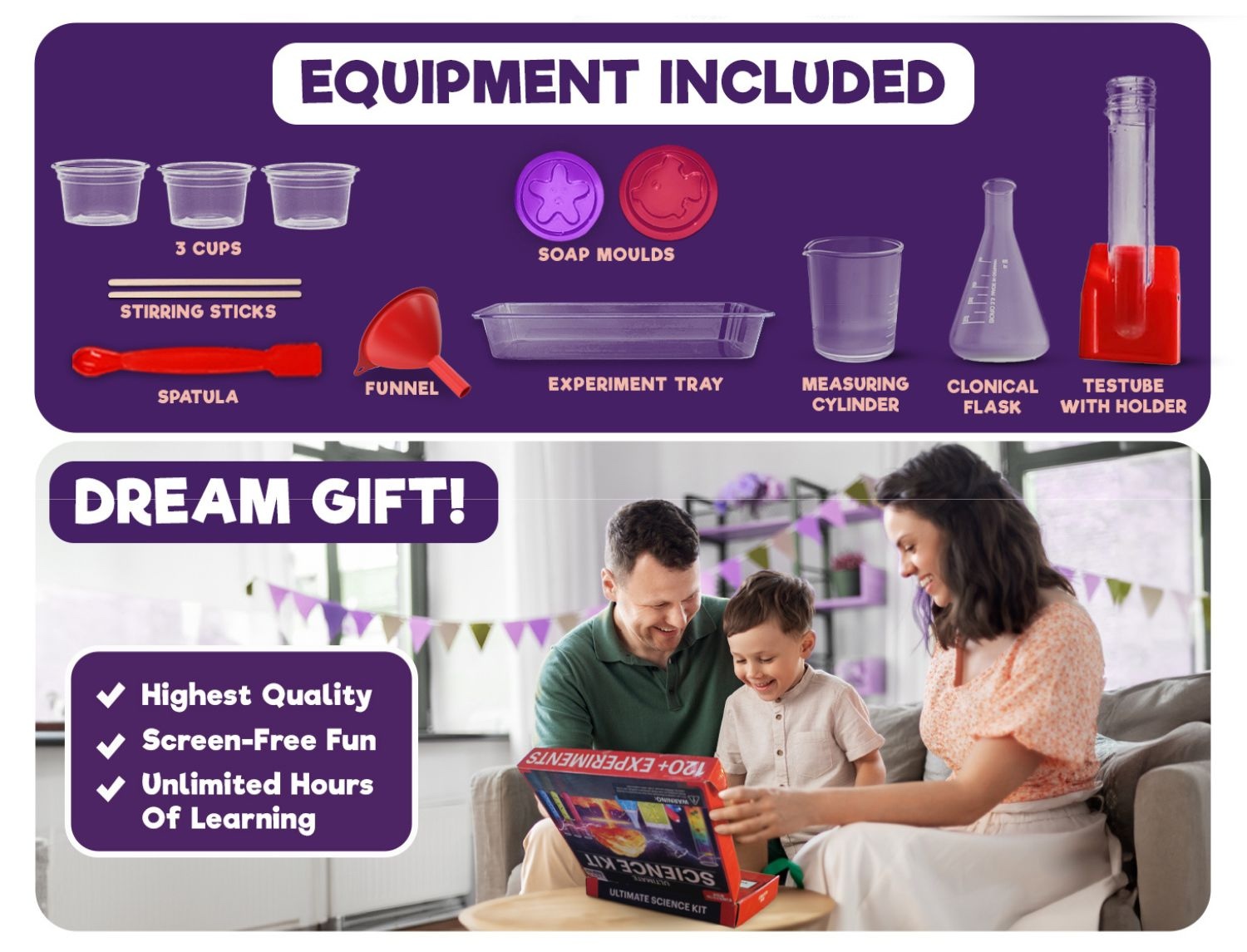
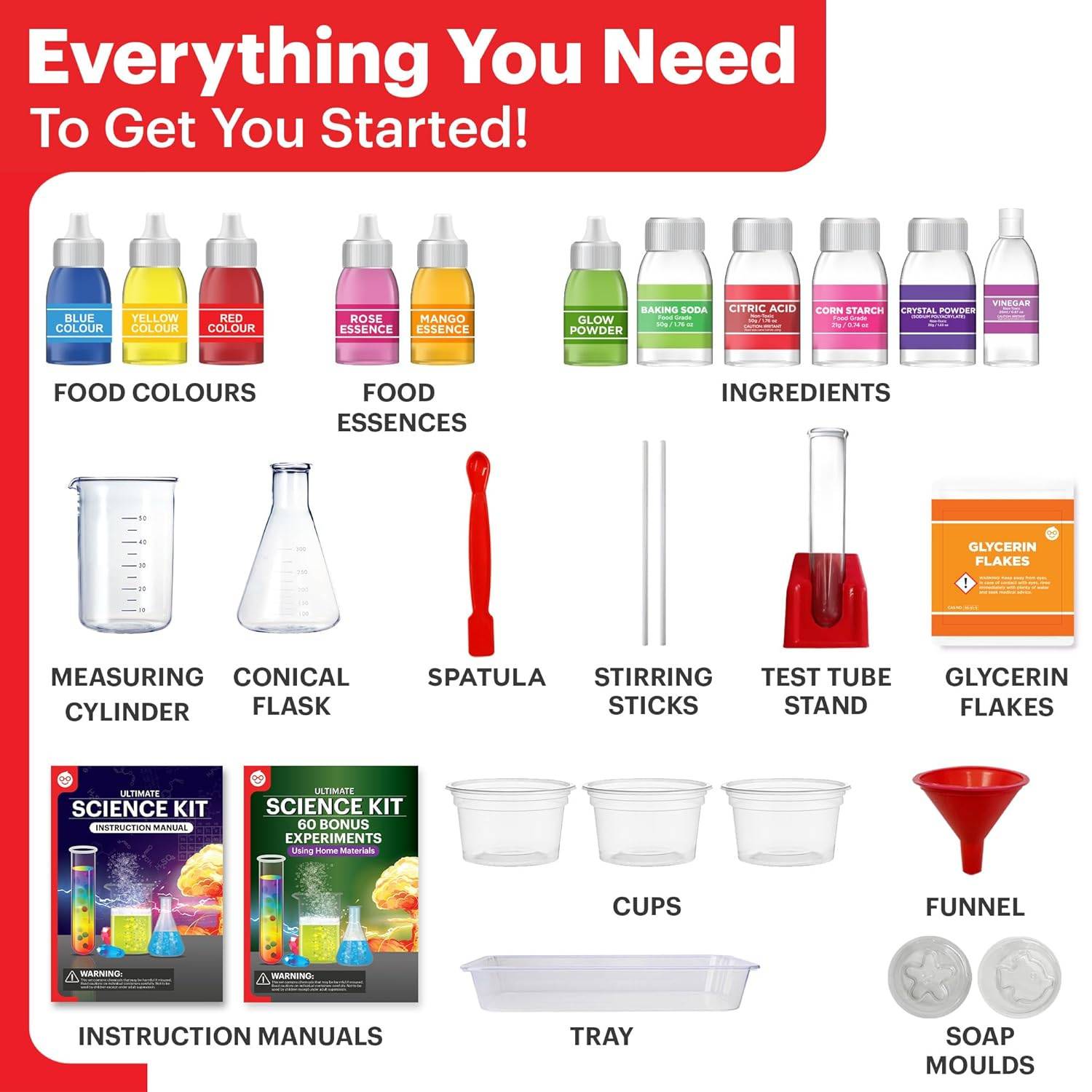
Some experiments may need common household items, so it is worth checking the instructions before you start and having anything extra ready. The product details list the full set of experiments and what each one needs.
A shared project, or solo play
One of the nicest things about it is how it flexes. With a young child it is a parent-and-child activity, a reason to sit down together and make something happen. With an older, confident reader it becomes independent play, with an adult nearby just for safety. Grandparents love it too, since a box of experiments is a ready-made project for every visit.
Keeping it going
To get the full life out of it, keep the kit in its box with all the parts together, and store any consumable items somewhere cool and dry. Keeping everything in one place means it is always ready for the next experiment, rather than half the pieces going missing between sessions.
Who it suits
It is for curious children of all kinds: the science-mad child who wants more, the one who is just getting interested, and even the child who finds school science dull but lights up doing it themselves. It suits home learning, school projects and homeschooling, and it works as both a shared activity and solo play.
It is less suited to children below the age guidance, since the experiments and any small parts are aimed at age 5 and up.
The short version
A science kit for kids gives your child over 120 hands-on experiments and the joy of discovering science by doing it. It suits ages 5 and up, works as a shared project or solo play, and keeps going for months rather than an afternoon. Supervise the experiments, follow the instructions, keep the parts together, and it becomes a box full of weekends and a real spark for a child's curiosity.