

The complete guide
Robot Project Kit for Kids: A Buyer's Guide to Hands-On STEM Play
Most toys do one thing, and children work them out in an afternoon. A robot project kit for kids is different. One box of parts becomes 29 different robots, so a child builds, plays, takes it apart and starts again. The fun does not run out after the first build, and neither does the learning. This guide covers what is in a good kit, what your child gets out of it, and how to pick the right one.
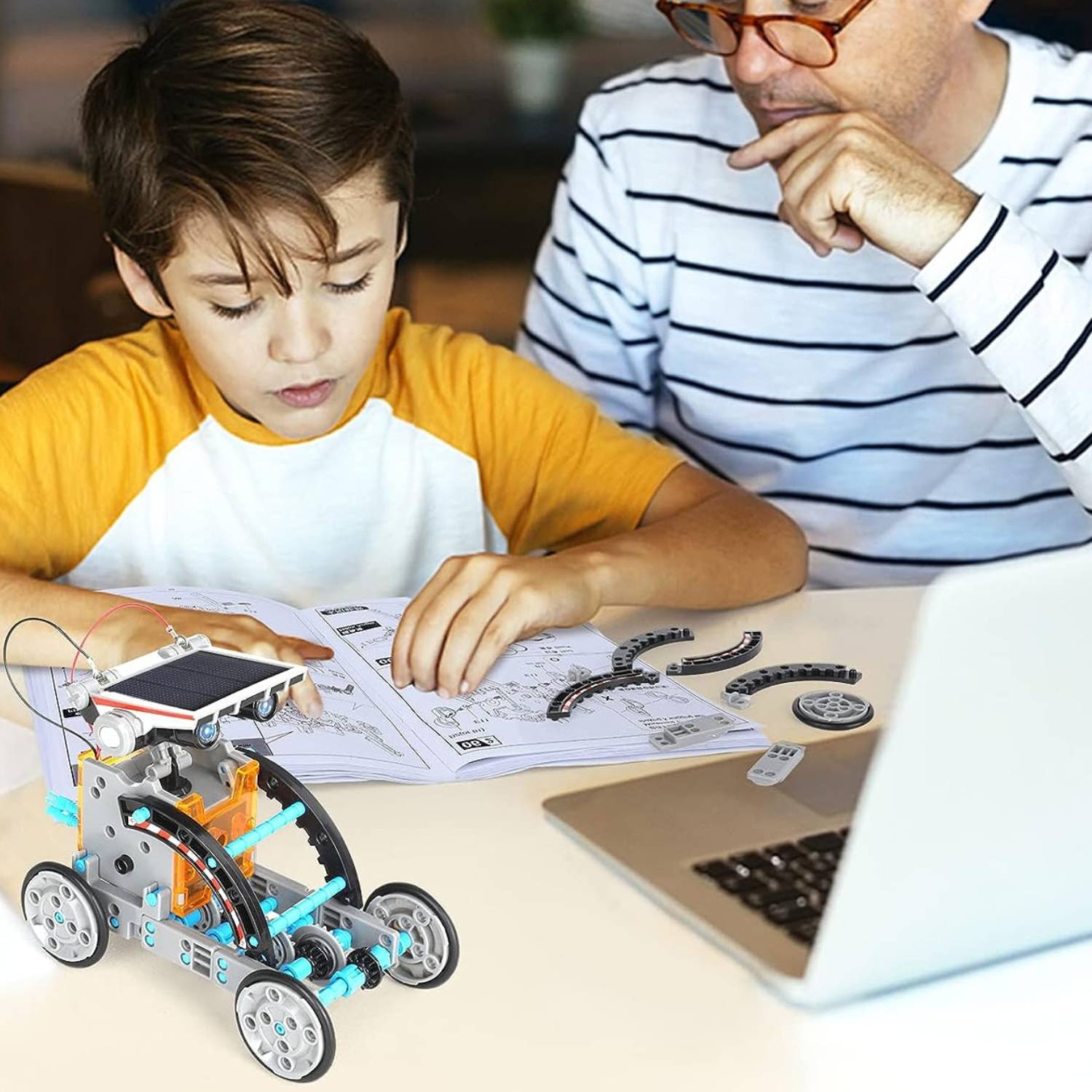
Building is the learning
The reason a build kit is such good value is that the learning is baked into the play. As a child works out how the parts connect and move, they are picking up real engineering ideas: how a structure holds together, how balance works, how one piece makes another move. None of it feels like a lesson, which is exactly why it sticks.
That hands-on approach suits how children actually learn. They try something, it does not work, they adjust, and it does. That loop of trying and fixing is problem solving in its purest form, and a robot kit gives a child a steady supply of it.
Twenty-nine models from one box
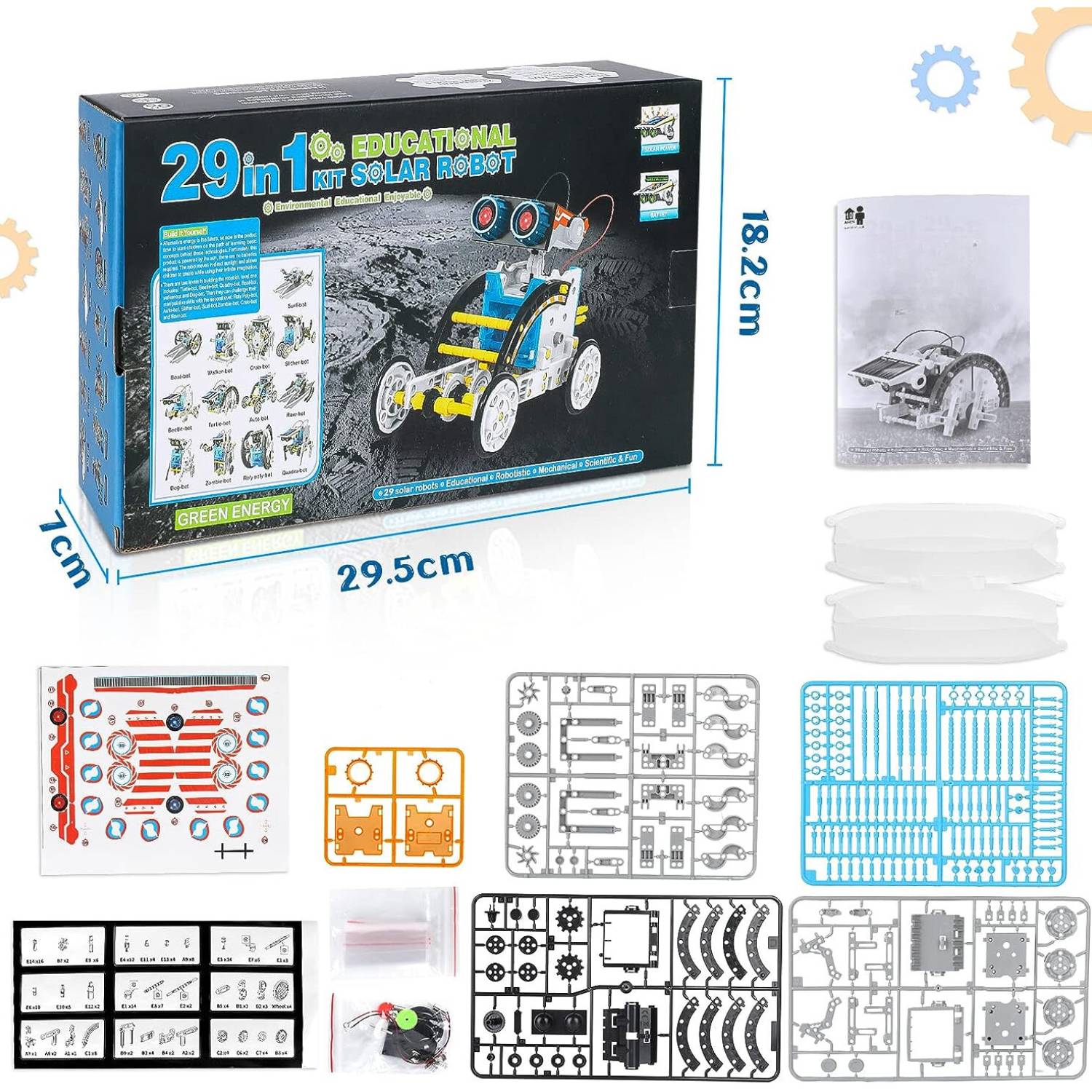
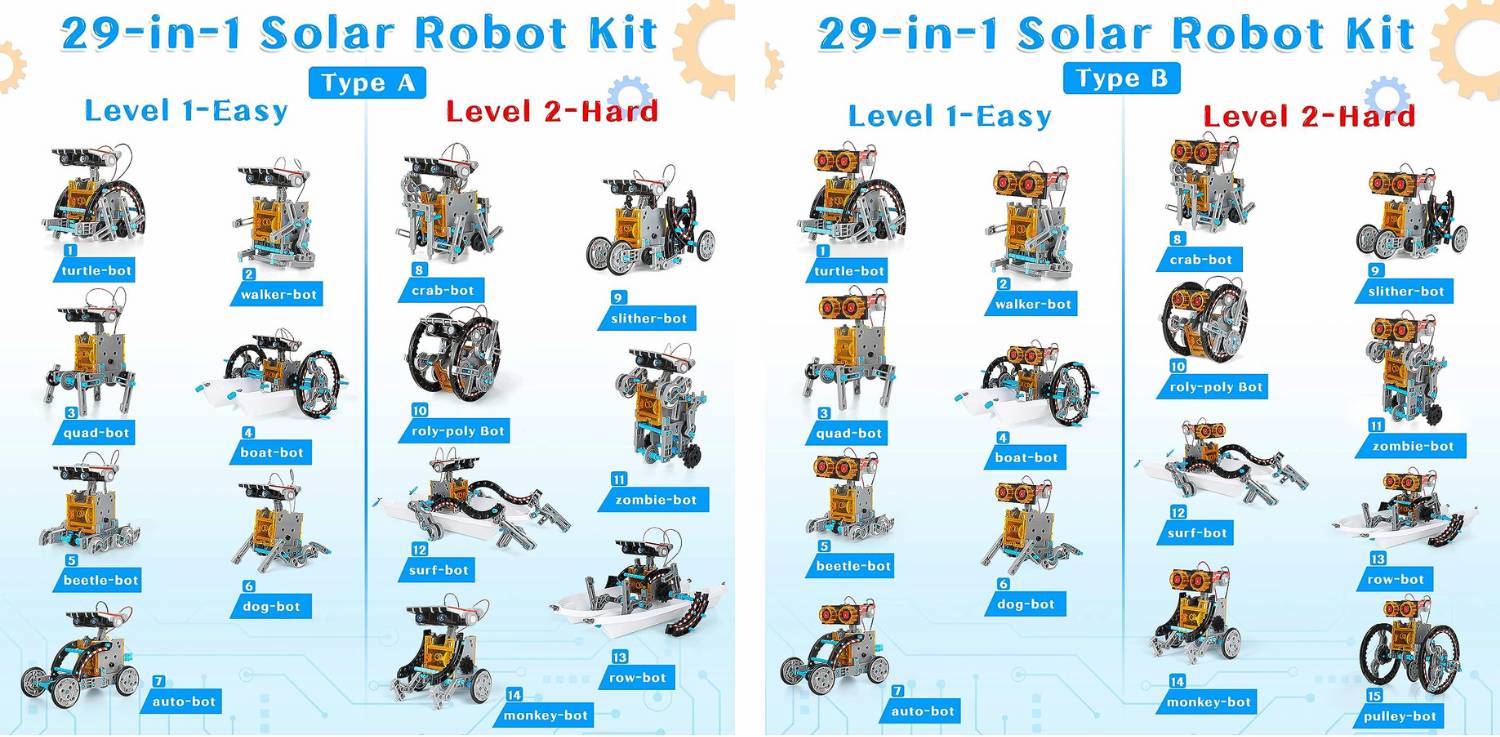
The headline number matters. This kit builds 29 different robots from the same set of parts. Your child makes one model, plays with it, then breaks it down and builds the next. That build-and-rebuild cycle is what gives the kit its staying power.
It also means the box keeps up with a growing child. The simpler models suit a younger or less experienced builder, while the more involved ones give an older child a proper challenge. With a recommended age of 8 to 18 years, the same kit offers something to a primary-school builder and a teenager alike.
Parts made for real use
A construction kit only works if the parts stand up to being assembled and pulled apart over and over. These are made from BPA-free, non-toxic, skin-safe ABS plastic, built for everyday handling by children and designed to take repeated building.
The flip side of having lots of parts is that they need looking after. The single best habit is to store everything back in the box after each session. A missing piece can block a build, so keeping the parts together is what gets you the full life out of the kit.
What age really suits it
The recommended range is 8 to 18 years, and that lower limit is there for a reason: the kit includes small parts, so it is not suitable for younger children, and the pieces should be kept away from toddlers and babies. Within the range, a younger builder will want a hand with the trickier models at first, while an older child will manage on their own and may seek out the hardest builds for the challenge.
A few honest notes
This is, at its heart, a hands-on mechanical build kit. If you are specifically looking for a programmable coding robot, check the product details for this item to confirm exactly what it includes, so the kit matches what you have in mind. Battery, motor and exact contents can vary between versions, so the listing is the place to confirm the specifics before you buy.
Why it beats a cheaper toy
A cheap toy is played with once and forgotten, and you buy another a month later. A build kit like this does the opposite. It makes 29 models, teaches real skills, and gets returned to for years as a child works through the builds and then rebuilds their favourites. Measured over time, an engineering toy set that keeps getting used is far better value than a shelf of single-use toys.
Who it suits
It is made for curious children who like to build, take things apart, and see how they work. It suits parents who want a screen-free toy with real substance, and it works just as well for school STEM lessons and homeschooling as it does at home. A child who loves dismantling things to see inside them will be in their element.
It is less suited to very young children, since the small parts put it firmly in the 8-and-over bracket.
The short version
A robot project kit for kids turns one box into 29 robots and turns building into learning. Your child builds, plays, takes it apart and builds again, picking up real engineering and problem-solving skills with their hands. The parts are skin-safe and made to last, the age range runs from 8 to 18, and the replay value is high. Keep the parts in the box, match the models to your child, and it will earn its keep long after other toys are forgotten.