

The complete guide
Inflatable Toddler Travel Bed: A Parent's Guide to Sleep Away From Home
Getting a small child to sleep in a strange place is hard enough without the bed being wrong too. A cot will not fit in the car. Hotel travel cots are a gamble, often the wrong size or missing altogether. And a normal air bed is a flat sheet of plastic with no edges, so a toddler rolls straight off it in the night. An inflatable toddler travel bed is built to fix exactly that, and this guide walks through how it works, who it suits, and how to look after it.
What makes it a toddler bed and not just an air mattress
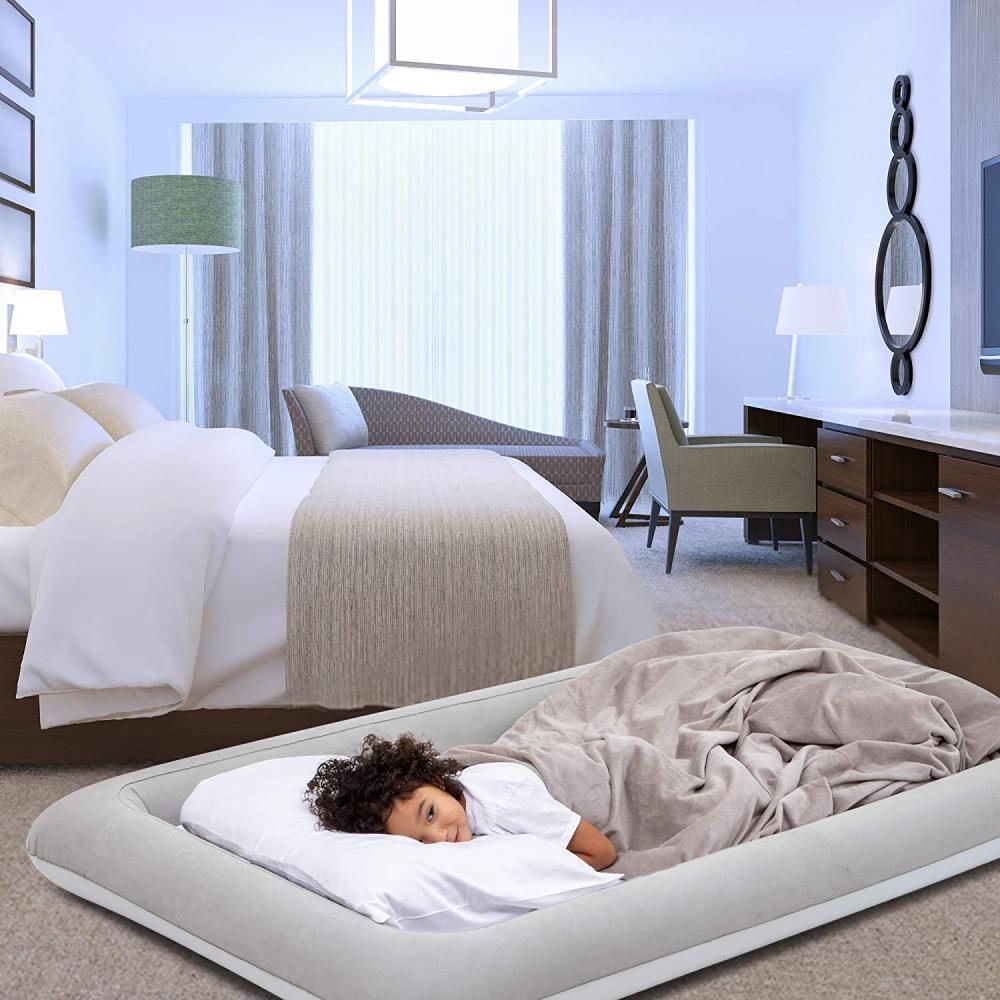
The difference is the sides. A standard air mattress is flat, with nothing to stop a child rolling off. This bed has raised bumper edges running all the way round, so your child sleeps in a contained space rather than on an open surface.
That changes two things. First, safety: the built-up edges help stop rolls and falls without you wedging pillows or pushing the bed against a wall. Second, comfort: the sides make the bed feel snug and cosy, which often helps a toddler settle in a room that is not their own. It is the same idea that makes a cot feel safe, in a bed that packs into a bag.
Sized for the years between cot and big bed
This is built for a real stretch of childhood, not just one year. It holds up to 130 kg and suits children up to around 120 cm tall, which covers the gap between leaving the cot and being happy on a normal spare bed.
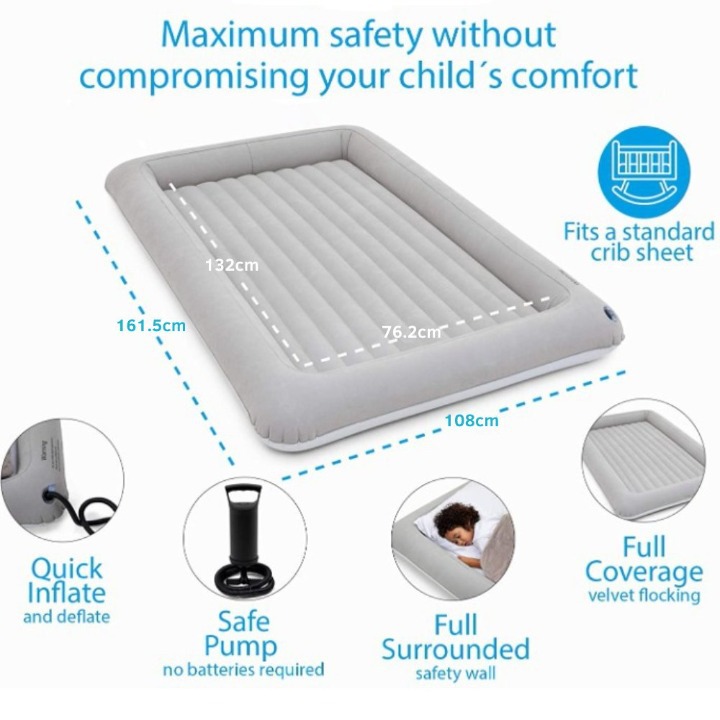
The sleeping area is about 132 cm long and 76.2 cm wide, with the whole bed measuring around 161.5 cm by 108 cm once the bumper sides are counted. That inner space is roomy enough for a toddler to stretch out and still feel held in by the edges.
It fits the sheets you already own
One small detail makes a big difference at bedtime: the sleeping area fits a standard crib sheet. You do not need to buy special bedding. You make it up with the same cot sheet your child sleeps on at home, and that bit of familiar smell and feel goes a long way in a hotel room or a relative's spare room.
Add their usual blanket and a favourite toy and the bed feels like theirs, even though you only unpacked it ten minutes ago.
Quick to set up, easy to carry
The whole point is portability. It inflates in a couple of minutes with a pump, and deflates just as fast in the morning. Once the air is out it rolls into a carry bag that slips into a suitcase or the boot of the car.
Compare that to a folding travel cot, which is heavier, bulkier and a wrestling match to pack. For an older toddler who has outgrown a cot, this is far easier to live with on the move. If you travel often, keep a small foot or electric pump in the bag with it so the bed is always ready to go.
Where it earns its keep
This bed suits any time a proper toddler bed is not an option. Hotels and holiday lets, where you cannot rely on what is provided. Grandparents' houses, where it lives in a cupboard and comes out when the grandchildren visit. Sleepovers at friends' homes. And camping, where it lifts your child off the cold, hard ground and gives them safe sides inside the tent.
For camping in particular, keep it on a groundsheet, add a thin mat or blanket under the sheet for warmth, and check the floor for anything sharp before you set up. Air beds can feel cool from below, so a layer underneath keeps your child warm through the night.
Looking after it so it lasts
Inflatable beds last for years if you treat them with a bit of care. Keep it on a clean, smooth surface away from sharp toys, zips and pet claws, since most punctures come from grit or something sharp underneath. Do not over-inflate it; firm is enough.
To clean it, wipe it down with a damp cloth and a little mild soap, then let it dry fully before you deflate and pack it. Putting it away damp is the quickest way to give it a musty smell. Once it is clean and dry, roll it into its bag and store it somewhere cool and dry, and it will be ready the next time you need it.
A few honest limits
This is a toddler and older-child bed, not a baby product. If your child still needs a cot, use a proper travel cot and follow safe-sleep guidance for their age. The raised edges are bumpers, not a high-sided cot, so always use it at floor level rather than on a raised platform or bunk. And like any air bed, it softens a little as the air cools overnight, so inflate it firm at bedtime and top it up if you need to.
The short version
An inflatable toddler travel bed gives your little one a safe, contained, familiar place to sleep wherever you go. The raised sides help stop rolls and falls, it fits the crib sheets you already own, and it blows up in minutes and packs into a bag. For hotels, grandparents, sleepovers and camping, it turns the hardest part of travelling with a small child into a couple of minutes with a pump.